
Guide one
Vanilla Beans
A good vanilla bean is one of the most fragrant things in any kitchen. Knowing how beans are grown, graded and stored helps you choose well and waste nothing.
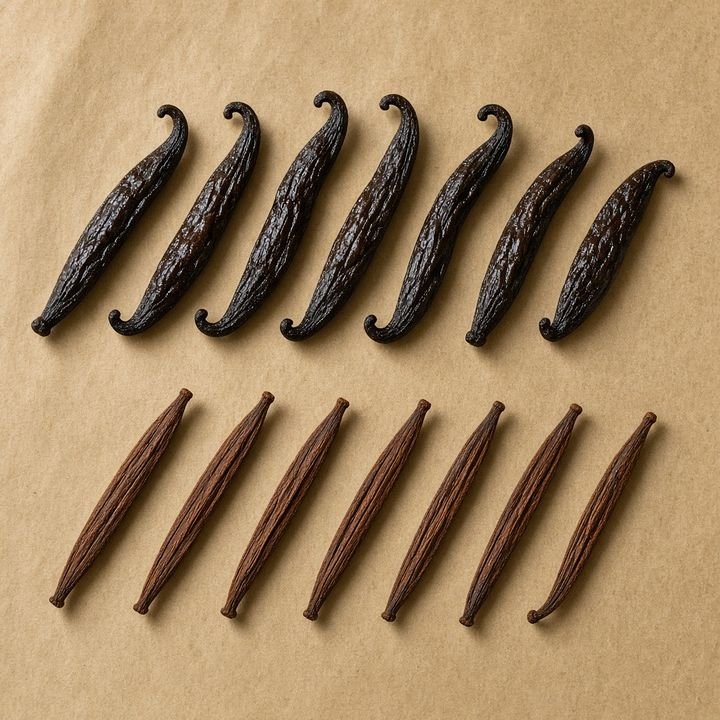
From orchid to pod
Vanilla is the fruit of a climbing orchid. Each flower opens for about a day, and outside its native range in Mexico and Central America almost every flower is pollinated by hand. The green pods then take around eight to nine months to mature on the vine.
Freshly picked pods have little aroma. Curing develops the flavour over several months, usually through stages of blanching or killing, sweating, sun drying and slow conditioning. It is careful, labour-intensive work, which is a big part of why vanilla is expensive.
Grades at a glance
| Grade A (gourmet) | Grade B (extract grade) | |
|---|---|---|
| Look and feel | Plump, glossy, supple | Drier, firmer, may look reddish |
| Moisture | Higher | Lower |
| Best use | Scraping seeds into desserts | Extracts, infusions and vanilla sugar |
Grading terms are not standardised everywhere, so descriptions vary between sellers. Look at length, flexibility and aroma as well as the label.
What to look for when buying
- Aroma: rich and sweet, never musty, smoky in a burnt way or sour.
- Flexibility: Grade A beans should bend without snapping.
- Surface: an oily sheen is good. Fine white crystals can be natural vanillin, but fuzzy patches are mould.
- Clear origin and species: good sellers say where the beans were grown and whether they are Vanilla planifolia or Vanilla tahitensis.
- Prices that make sense: very cheap “gourmet” beans are often old, dry or mislabelled.
Storing beans
Wrap beans in wax paper or keep them in an airtight glass jar or tube, somewhere cool and dark. Do not refrigerate them, as that can dry them out and encourage mould. Check them every few weeks and let them breathe for a few minutes.
Reviving a dry bean
A bean that has dried out is not wasted. Soak it in warm milk, cream or water for a while before splitting, or drop it straight into a bottle of extract or a jar of sugar.
Banilya Shop is an independent guide. It does not sell vanilla or recommend particular sellers. Prices and availability change often, so compare several sources before buying.